
Ultra-realistic vertical 9:16 cinematic street advertising photo, high-end editorial realism, natural colors, crisp micro-texture, 8K detail, filmic contrast, no text, no logos, no watermark.
Core instruction (must follow): TAKE THE FURNITURE FROM ATTACHMENT AND ADAPT IT WITH THE STYLE. Use the attached furniture photo as the only product source: accurately preserve its silhouette and design, then upscale it into a premium “hero object” with realistic materials, correct proportions, clean edges, and believable shadows/reflections. Remove any background from the attachment, keep only the furniture, and make it look like it truly exists in the scene.
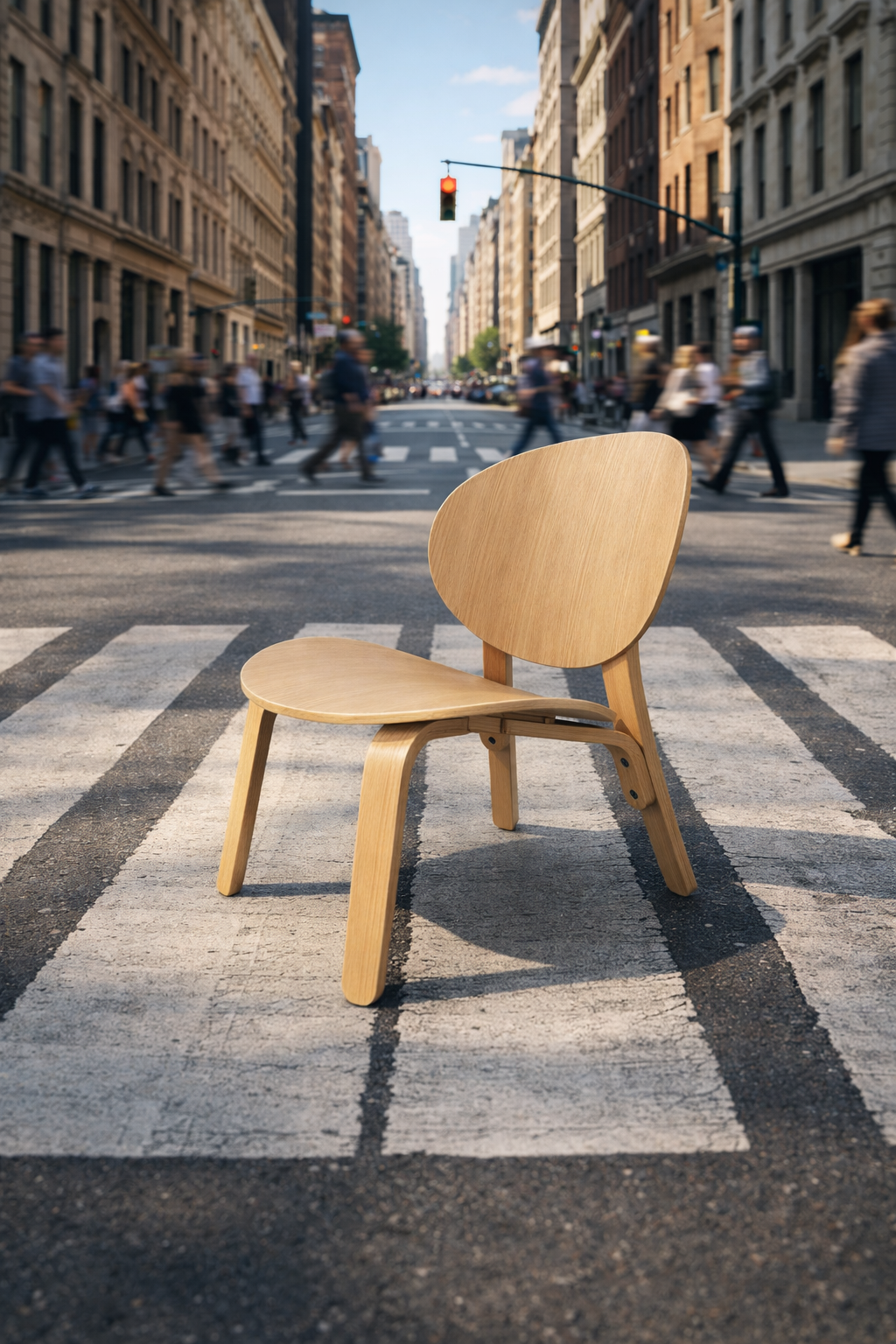
Scene / environment: a wide zebra crosswalk in a dense historic city street “canyon” with tall stone-and-brick buildings on both sides. The camera is low, around seat-height, looking slightly down the street; strong leading lines from the crosswalk stripes pull the eye into the background. Clear blue sky above the street gap. A single suspended traffic light in the distance shows red. Street details are subtle and realistic (curbs, building façades, window frames, soft grime, tiny imperfections), but the scene remains clean and premium—no clutter, no trash, no distracting signage.
Composition: the furniture is placed alone on the crosswalk in the lower foreground, slightly off-center (center-left feel), large and dominant in frame. The furniture is perfectly sharp and tack-focused. The background is alive with city movement: a crowd of pedestrians crossing left-to-right and right-to-left behind the furniture, rendered as motion-blurred streaked figures (recognizable as people but without identifiable faces). Keep the furniture as the only crisp subject; everything moving should blur.
Lighting: bright daytime sun with realistic directionality and soft atmospheric bounce. Strong, clean shadows cast by the furniture across the crosswalk stripes (sharp-ish edges with natural falloff). Gentle warm highlights on the furniture’s surfaces, with physically accurate shading in crevices and under the seat/legs. The overall mood is “calm hero product vs. chaotic motion.”
Camera / realism settings: full-frame look, 35–50mm perspective (natural, not distorted), low angle, deep realism. Use a shutter speed that creates strong pedestrian motion blur while keeping the static furniture sharp (tripod-like stability for the scene). Moderate depth of field: furniture razor sharp, background slightly softer but still detailed; motion blur is the main separation. Natural filmic grade, slightly warm highlights, true-to-life contrast.
Materials (apply to the attached furniture design): elevate to premium upholstery with tactile fabric grain (bouclé / textured weave vibe), realistic fibers and stitching where appropriate, clean matte-painted or powder-coated frame, believable wear-free showroom condition. No fantasy shapes; keep it plausible and manufacturable.
Final constraints: no typography, no graphic overlays, no brand marks, no extra props near the furniture, no additional objects in the foreground. The image should feel like a clever luxury ad: one peaceful chair in a busy crosswalk, with pedestrians blurred around it, red traffic light in the distance, dramatic leading lines, and perfect commercial realism.